

Spinal tumors are growths of abnormal tissue in the spine. Many are cancerous and will invade new tissue if left untreated, but even benign tumors can cause serious health complications by damaging bone and pressing against nerves. NU-Spine: The Minimally Invasive Spine Surgery Institute offers spine cancer treatment for patients across New Jersey, Pennsylvania, and Florida. Our spine doctors deliver cutting-edge, personalized care to help patients get the best outcomes from their treatment.
Key Takeaways
- Spinal tumors are masses of abnormal tissue that grow in the spine. They can form in any type of tissue and may be benign or malignant (cancerous).
- Symptoms of spinal tumors depend on where they form. They may cause neck pain, back pain, or neurological dysfunction from pressing against nerves.
- NU-Spine surgeons use a personalized diagnostic process to locate the tumor, identify its type, and determine what structures and tissues are affected.
- Treatment options for spinal tumors may include active surveillance, radiation therapy, systemic treatments, or surgery.
What Is a Spinal Tumor?
A spinal tumor is an abnormal mass of tissue that grows in or around the spine. Tumors can develop in any of the many types of spinal tissue, including:
- Vertebrae
- Cartilage
- Spinal discs
- Spinal cord
- Nerve roots
- Blood vessels
- Membranes
- Connective tissue
Tumors can be malignant (cancerous), meaning that they can spread into nearby tissue. They can also be benign, meaning that they are not cancerous and do not spread. Even benign tumors may cause serious complications by damaging nerves and compromising the bone.
Primary Spinal Tumors
Primary spinal tumors are tumors that originate in the spine. They occur when cells in spinal tissue undergo a mutation that causes them to divide rapidly or prevents them from dying when they should. Primary tumors are relatively rare in the spine. While they can be malignant, most primary spinal tumors are benign (non-cancerous).
Metastatic Cancer in the Spine
Metastatic cancer in the spine is cancer that started elsewhere in the body and spread into the spine. Almost any cancer type can cause spine metastases, but the most common types are breast, prostate, and lung cancers. These tumors require coordination between spine surgeons, medical oncologists, radiation oncologists, and other specialists to treat effectively.
What Are the Symptoms of Spinal Tumors?
Not all spinal tumors cause symptoms. While the tumor is small, it can go completely unnoticed. Symptoms develop as the tumor grows large enough to press against neighboring tissues. The signs to watch for differ depending on what section of the spine the tumor forms in.
Cervical Spine Tumor Symptoms
Cervical spine tumors develop in the neck. They press against nerve roots that serve the shoulders, arms, and hands, causing symptoms such as:
- Neck pain
- Numbness or tingling in the arms or hands
- Loss of coordination in the arms or hands
- Balance problems
Thoracic Spine Tumor Symptoms
Thoracic spine tumors develop in the upper to middle back. They interfere with the nerves that serve the torso and legs. Patients may experience:
- Back pain
- Rib pain
- Loss of sensation in the torso
- Leg weakness or numbness
- Balance problems
- Difficulty walking
Lumbar Spine Tumor Symptoms
Lumbar spine tumors develop in the lower back, where nerves that serve the legs and bowels branch away from the spine. These tumors cause:
- Lower back pain
- Shooting leg pain (sciatica)
- Numbness or weakness in the legs
- Loss of leg control
- Changes in mobility
- Bowel or bladder dysfunction
How Are Spinal Tumors Diagnosed?
When a patient visits NU-Spine with a suspected spinal tumor, the neurosurgeon begins with a comprehensive diagnostic phase. This process both confirms the diagnosis and gets more information that will guide a treatment plan. The tests used may include:
- Neurological examination: The surgeon reviews the patient’s medical history and assesses their nerve function, including strength, sensation, reflexes, balance, and walking ability.
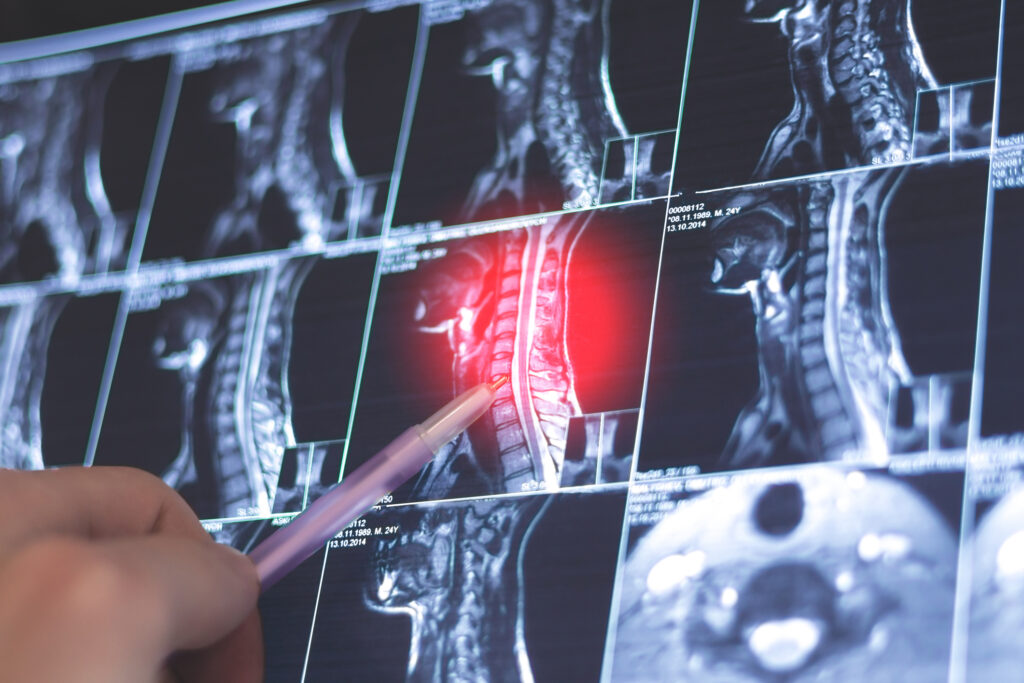
- Imaging: X-rays, computed tomography (CT) scans, and magnetic resonance imaging (MRI) are used to locate the tumor and evaluate the spine’s stability.
- Biopsy: The surgeon removes a small sample of tumor tissue to study in a laboratory. The results help determine the tumor type and identify important characteristics.
The diagnostic process is unique to each patient, depending on their symptoms and overall health. Our surgeons also work with patients to understand their goals and concerns for treatment.
How Is Spine Cancer Treated?
Just like the diagnostic process, spine cancer treatment is individualized. Patients receive a personalized care plan that involves one or more of the following treatments:
Observation and Monitoring
Small, benign tumors may not require immediate treatment, especially if they do not cause serious neurological symptoms. These tumors can be monitored with regular imaging tests. If the tumor’s behavior changes, then the patient and their physician can discuss active treatment.
Radiation Therapy
Radiation therapy uses a beam of high-energy particles to damage tumor DNA, killing the cells before they can divide. This treatment can be effective at killing tumors without an operation. It may be recommended as an alternative to surgery, or it may be used to shrink tumors and make them easier to remove with surgery.
Systemic Cancer Treatment
Spine metastases have already spread from other parts of the body. Cancer cells are likely found in multiple locations and may travel through the bloodstream. Systemic treatments are used to kill cancer throughout the body. Options include:
- Chemotherapy: Strong drugs that are toxic to fast-dividing cells.
- Targeted therapy: Drugs that target cells with specific proteins or mutations.
- Immunotherapy: Advanced modalities that help the immune system fight cancer.
- Hormone therapy: Drugs that block the hormones that cancers use to grow.
The most appropriate systemic therapy depends on where the cancer originated.
Spinal Cancer Surgery
Spinal cancer surgery is recommended for tumors that cause severe nerve compression, weaken the spine’s structure, or are highly likely to spread. The goal of surgery is to preserve neurological function and stabilize the spine. Different procedures may be used, depending on the unique case:
- Tumor resection: A resection aims to remove the tumor, or at least as much as can be removed safely. Partial resection may be preferred for some tumors.
- Laminectomy: Removing part of the vertebral bone can create access to the tumor. This method may also be used to decompress the spinal cord around tumors that cannot be resected.
- Corpectomy: If the tumor has significantly compromised a vertebra, then the whole bone may be removed in order to remove the tumor and make space for spinal reconstruction.
- Spinal reconstruction: If the tumor has caused substantial bone loss, instability, or deformity, then the surgeon may use bone graft and hardware to restore normal spine structure.
At NU-Spine, surgeries are performed by outstanding neurosurgeons, including Dr. Branko Skovrlj and Dr. Robert J. Rothrock.
Find Expert Spinal Cancer Surgery Near You, Pennsylvania, and Florida
If you have been diagnosed with a spinal tumor, transform your life with a touch of care at NU-Spine: The Minimally Invasive Spine Surgery Institute. We offer the cutting edge in minimally invasive procedures, including spinal cancer surgery, at locations near you in New Jersey, Pennsylvania, and Florida. To learn more about spinal cancer treatment or to speak with a spine surgeon, contact us today.
Spinal Cancer Surgery FAQ
What is the difference between a primary spinal tumor and a metastatic spinal tumor?
Primary spinal tumors are tumors that originate in the spine. They develop from cells that naturally occur in the spine, such as the bone, cartilage, discs, blood vessels, or membranes. They are relatively rare and usually benign. Metastatic spinal tumors are those that have spread to the spine from other areas of the body, such as the lung, prostate, or breast. They are made of cells from their point of origin. Metastatic tumors are more common and usually malignant.
Which cancers can spread to the spine?
Almost any type of cancer can spread to the spine. However, the most common sources of spinal metastases are breast, lung, and prostate cancers, as well as blood cancers such as multiple myeloma and lymphoma. Between 30 and 70 percent of cancer patients develop a spinal metastasis at some point during the course of their disease.
What are the most common symptoms of a spinal tumor?
The most common symptoms of a spinal tumor include back or neck pain and neurological problems such as numbness, tingling, muscle weakness, bowel and bladder issues, or difficulty walking. Not all spinal tumors cause symptoms at the start.
Does every spinal tumor require surgery?
No, not every spinal tumor requires surgery. Non-cancerous (benign) and slow-growing tumors can be safely monitored with regular imaging scans, especially if they don’t cause any nerve pressure. Some tumors may also respond well to radiation therapy without an operation.
When is spinal cancer surgery recommended?
Spinal cancer surgery is recommended when the tumor is causing severe nerve compression, when it structurally weakens the vertebrae, or when the tumor is malignant (cancerous).
Can spinal tumor surgery remove the entire tumor?
Whether surgery can completely remove a tumor depends on the tumor’s type, location, and whether it has invaded the spinal cord or nerves. Complete resection is usually possible for small, benign tumors with well-defined borders. Large tumors, especially ones that are growing inside the spinal cord tissue, may need partial removal combined with other treatments.
What is spinal reconstruction, and when may it be necessary after spinal tumor surgery?
Spinal reconstruction is a surgical procedure to rebuild and stabilize the spine. After removing a spinal tumor, there may not be enough healthy tissue left for the spine to support itself. Bone graft, hardware, or implants are required to restore the spine’s normal structure.
How long does recovery from spinal cancer surgery take?
Recovery expectations for spinal cancer surgery depend on how large the tumor was, the complexity of the procedure used, and the extent of nerve damage caused by the cancer. Initial recovery usually takes between 3 and 12 weeks. Returning to full, normal function might take three months up to a year or more, especially if spinal fusion or reconstruction was required.